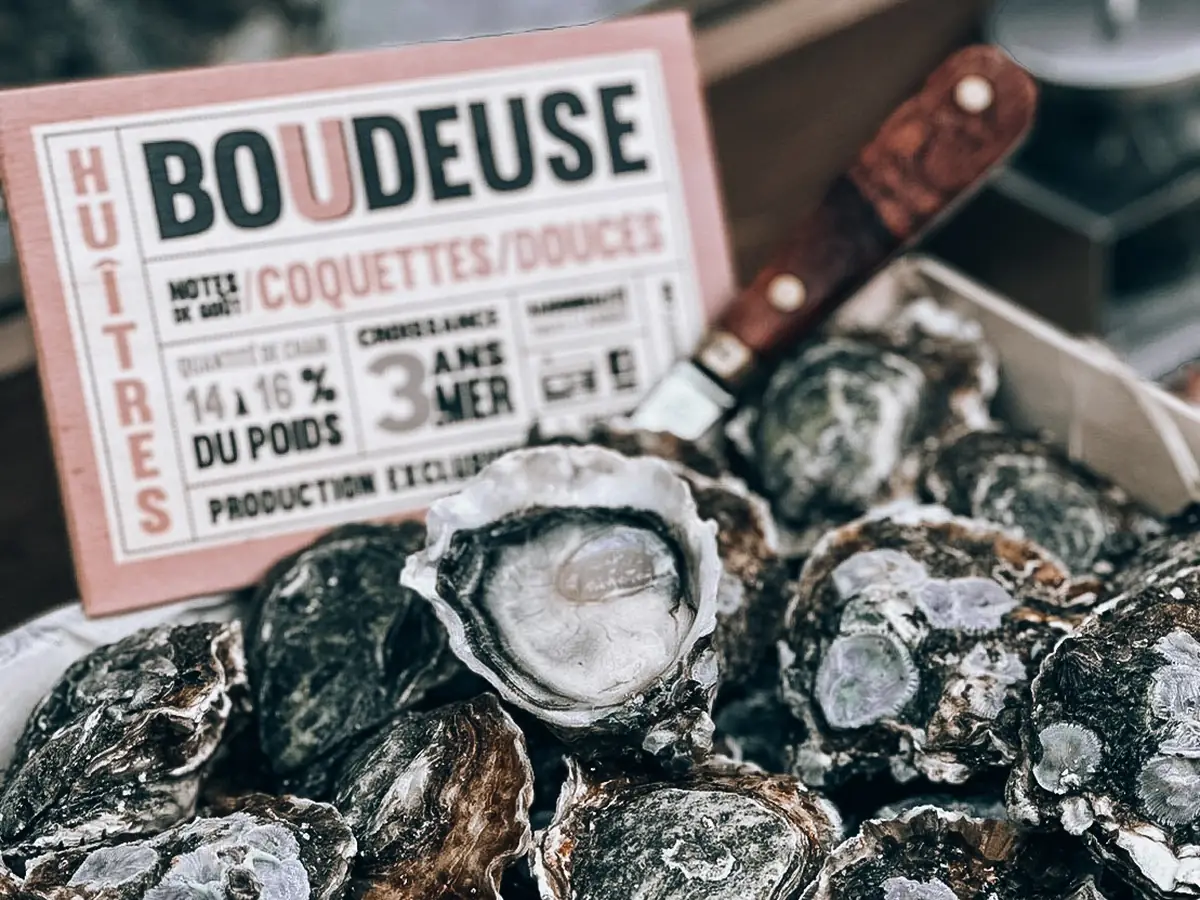
Boudeuse
David Hervé
Marennes-Oléron, Charente-Maritime, France
The Hervé family has farmed the Marennes-Oléron basin since 1939 — four generations, working out of Saint-Just-Luzac on a stretch of Charente-Maritime coast that is half sea, half salt marsh.
The Boudeuse is the one people misread. The house's own description is precise about why it looks the way it does: the shell has been worked for three years by the waves and by the hand of the oyster farmer, and what it becomes is a capsule of mother-of-pearl holding a generous flesh. Small on the outside, not small inside.
Hervé nurse and grow it entirely in their own parcs in Charente-Maritime, and it carries 14 to 16 per cent of its total weight in meat. The house calls it the most generous of their small oysters, and the crate calls it coquette and douce — flirtatious and sweet.
On the palate
Not the salt-bomb the name suggests. Generous flesh with an oceanic sweetness and a delicious crunch — that is the producer's own phrasing, and it is accurate.
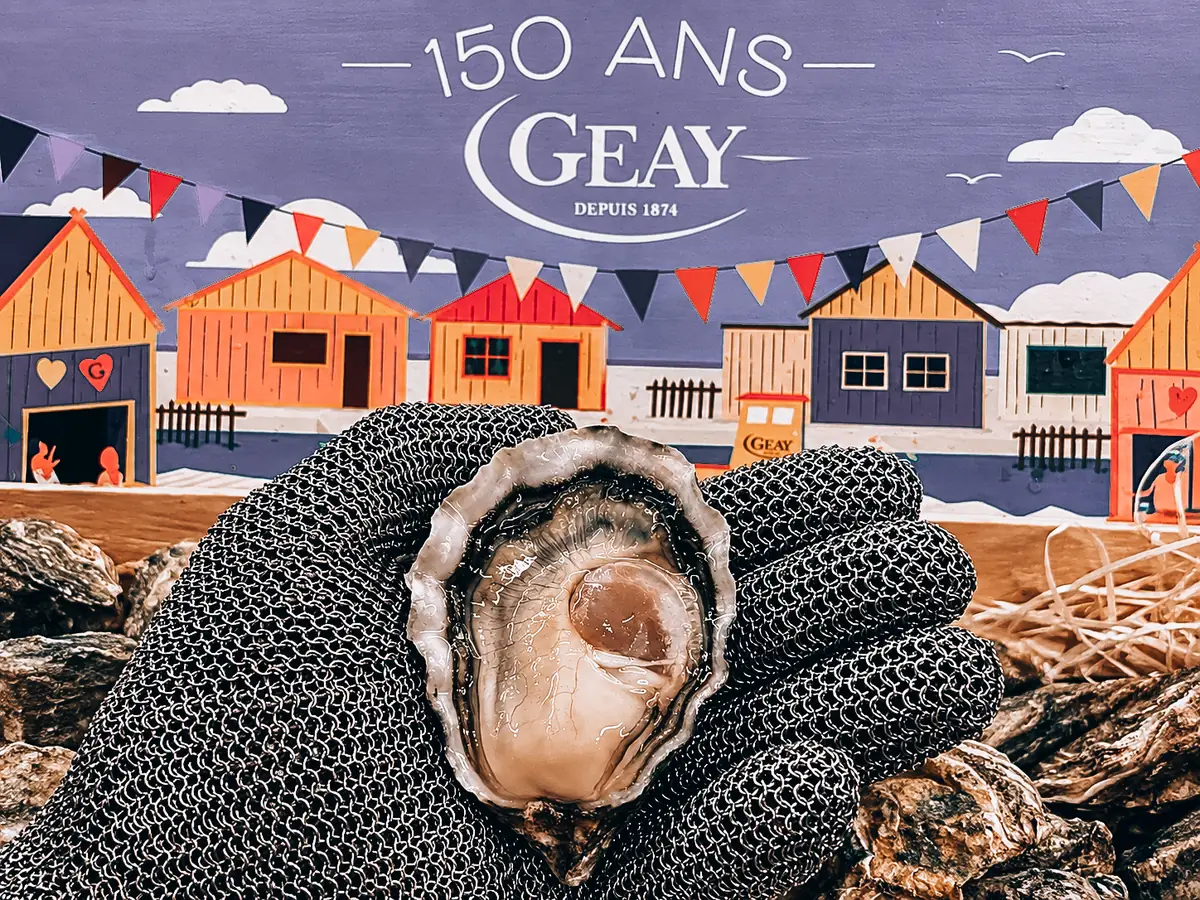
L'Ultime
Huîtres Geay
Marennes-Oléron, France
The Geay story starts at the oyster port of La Tremblade, where Eutrope Geay and his son Georges first sold the family's oysters. After the Second World War, René Geay — the third generation — drove deliveries to fishmongers across France himself, which is how the name travelled beyond the Charente coast. Patrice Geay then widened the range, and Adrien Geay, the fifth generation, has taken over. The crate in our photo reads 150 ans; the house dates from 1874.
L'Ultime earns its name in the last chapter of its life. It spends a minimum of thirty months growing on Geay's sea parcs, which would already be a finished oyster almost anywhere else. Then it is laid on the floor of a claire — a shallow clay basin, a nineteenth-century salt marsh converted for refining, that fills on the rising tide and holds the water when the sea withdraws — for at least 120 days.
The density is the whole point: two oysters per square metre. At that spacing there is no competition for food, and in a still, sediment- and plankton-rich basin the oyster does not merely rest — Geay describe it as genuinely growing again. Marennes-Oléron oysters are the only French oysters to hold protected geographical status, IGP, and the claire is the reason.
On the palate
Delicately iodised rather than salty, with the marsh aromatics the claires are prized for, a small hazelnut note and a fine texture. The flesh comes out remarkably aromatic and very meaty. Geay call it the favourite of experts looking for something they have not tasted before.
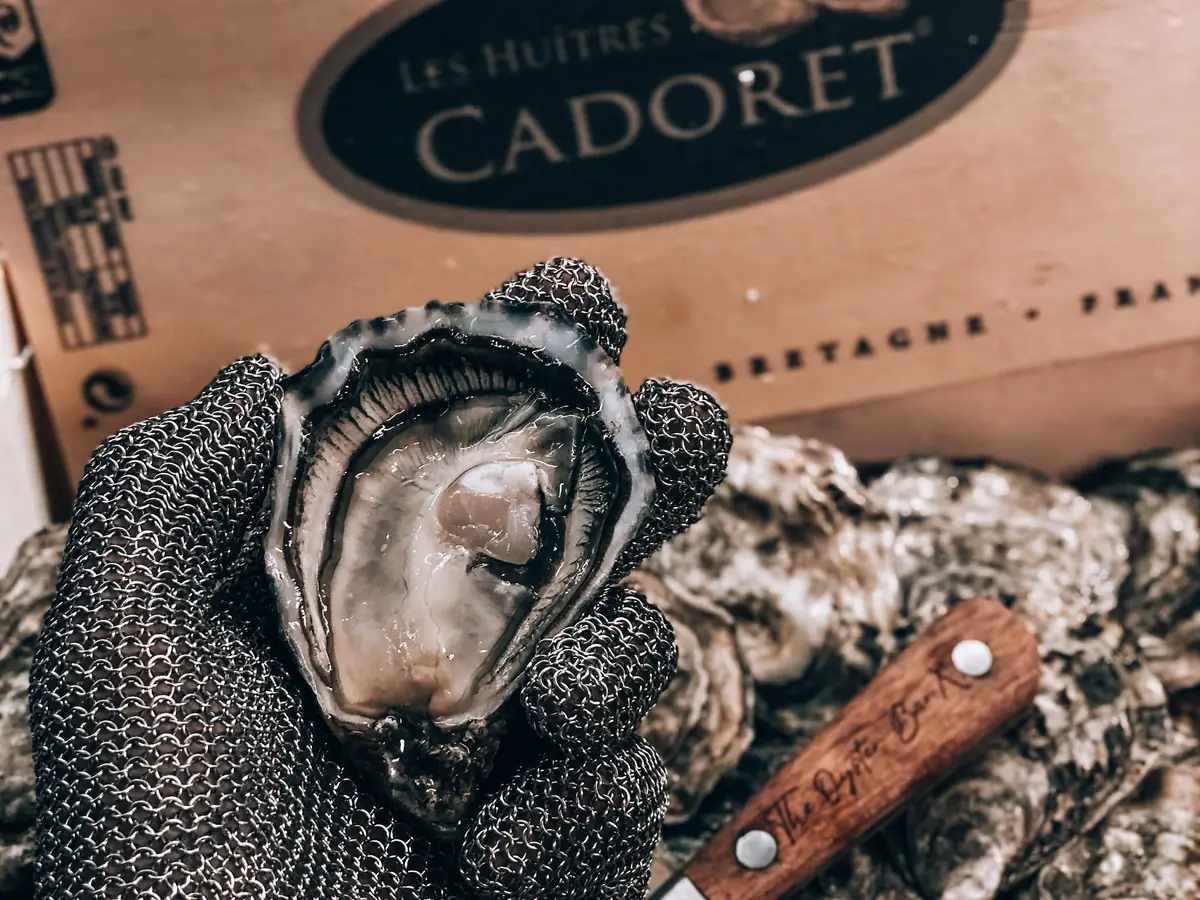
La Perle Noire
Les Huîtres Cadoret
Riec-sur-Bélon, Brittany, France
François Cadoret founded Les Huîtres Cadoret in 1880, and five generations later Jean-Jacques Cadoret runs it from Riec-sur-Bélon. Riec sits at the end of the ria formed by the Bélon, whose source is some 25 kilometres inland — a drowned valley where, depending on the tide, sea water mixes with fresh. That mixing is what enriches the plankton the oysters feed on, and every oyster Cadoret sell is finished there, whatever water it grew in.
The Perle Noire takes the long route. Cadoret's growing parcs are at Carantec in north Finistère and at Binic in the Côtes-d'Armor, more than 250 hectares between them. Oysters spend three to four years there before moving to Riec for a refining that takes three to six months.
The last step is what makes this one. At maturity, the four-year-old oysters are transferred onto parcs that uncover at low tide. Exposure at every ebb is hard work for an oyster and it answers by building thick, dense flesh. That earns the house's own grading of super spéciale. The Perle Noire is one of the exceptional cupped oysters Jean-Jacques developed when he joined his father — alongside La Lune and L'Héritage — and it is the reason the name turns up on menus in Europe and Asia.
On the palate
Firm, crunchy and very thick flesh, with a pronounced hazelnut character and a faint sweet after-note underneath. Those two things together are exactly what the house points to when it grades this oyster super spéciale.
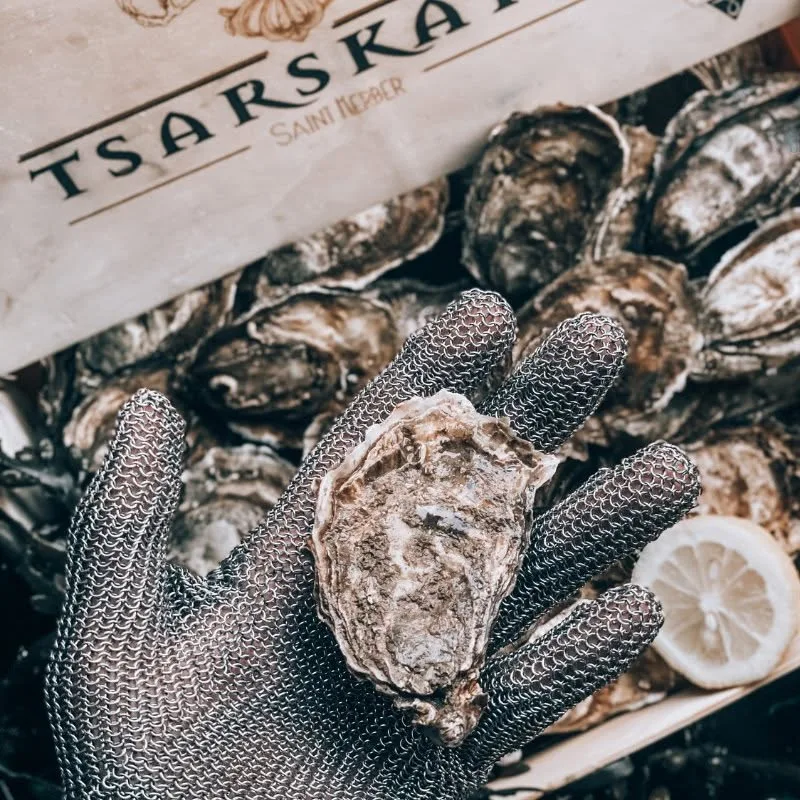
Tsarskaya
Les Parcs Saint-Kerber
Cancale, Bay of Mont-Saint-Michel, Brittany, France
The company began on 1 January 1930 with François Louvet and has grown from generation to generation since; Saint-Kerber have been producing oysters in the Bay of Mont-Saint-Michel, their historic site, since 1968. Cancale faces the Mont across a bay listed by UNESCO, and the tide there runs further and faster than almost anywhere in Europe.
Tsarskaya was created in 2004, named in reference to the Russian tsars — great consumers of oysters, and the reason Cancale's name travelled east in the first place.
It is selected from the spat stage, not chosen at the end, and then raised for three to four years in the heart of what the house calls a terroir of unique quality, followed with particular attention the whole way. What arrives is a well-filled oyster with white flesh, firm to the point of crunchy.
On the palate
The house's own tasting note is unusually specific and worth repeating at the table. A powerful, racy, iodised opening; then a chew they compare to the best Argentine beef — crunchy and tender at once — releasing a sweet perfume close to sweet almond; then it takes its time spreading across the palate before finishing on a light astringency, the way a great wine finishes on tannin.
Oysrí
Premier — Krijn Verwijs Yerseke
Ireland's south coast
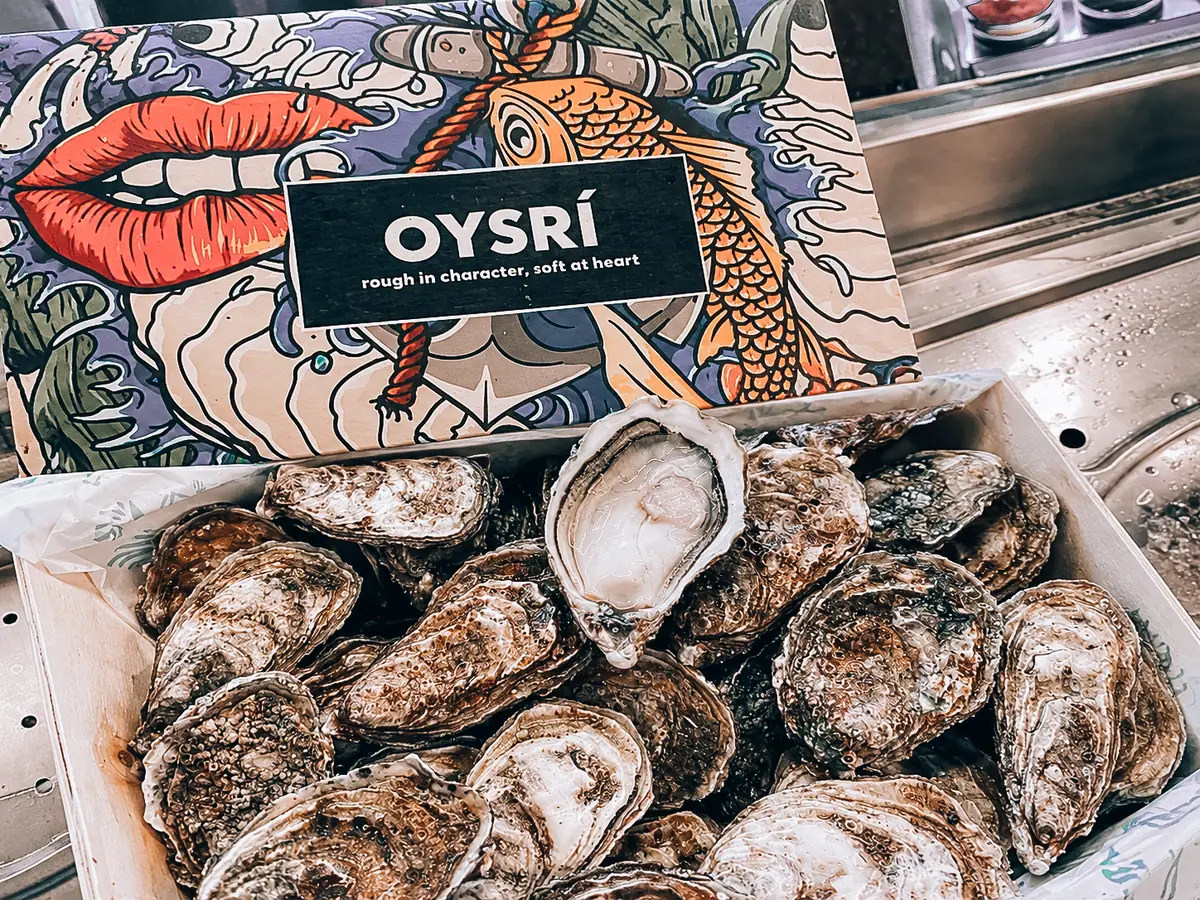
The name comes from oisrí, the Celtic word for oyster, and the crate carries the better description: rough in character, soft at heart.
It comes off the south coast of Ireland, where cold, salty waves break against moss-covered rock — the kind of exposed ground that produces a hard, awkward-looking shell. Premier's grower has been cultivating oysters in this area for centuries and knows these bays intimately. The achievement is that an oyster off water this rough opens easily and cleanly.
Its long growing period is the reason to put it on a tasting flight. More time in the water means more minerals and more natural flavour taken up from the sea, and the iron note it develops is unlike anything French on this list.
On the palate
As briny as the water it came from, with a distinctive iron-rich profile, a tender and juicy texture, and a surprisingly sweet finish. Premier call it the rock star of their range.
Zeeuwse Platte Oester — Heritage
Premier — Krijn Verwijs Yerseke
Zeeland, Netherlands
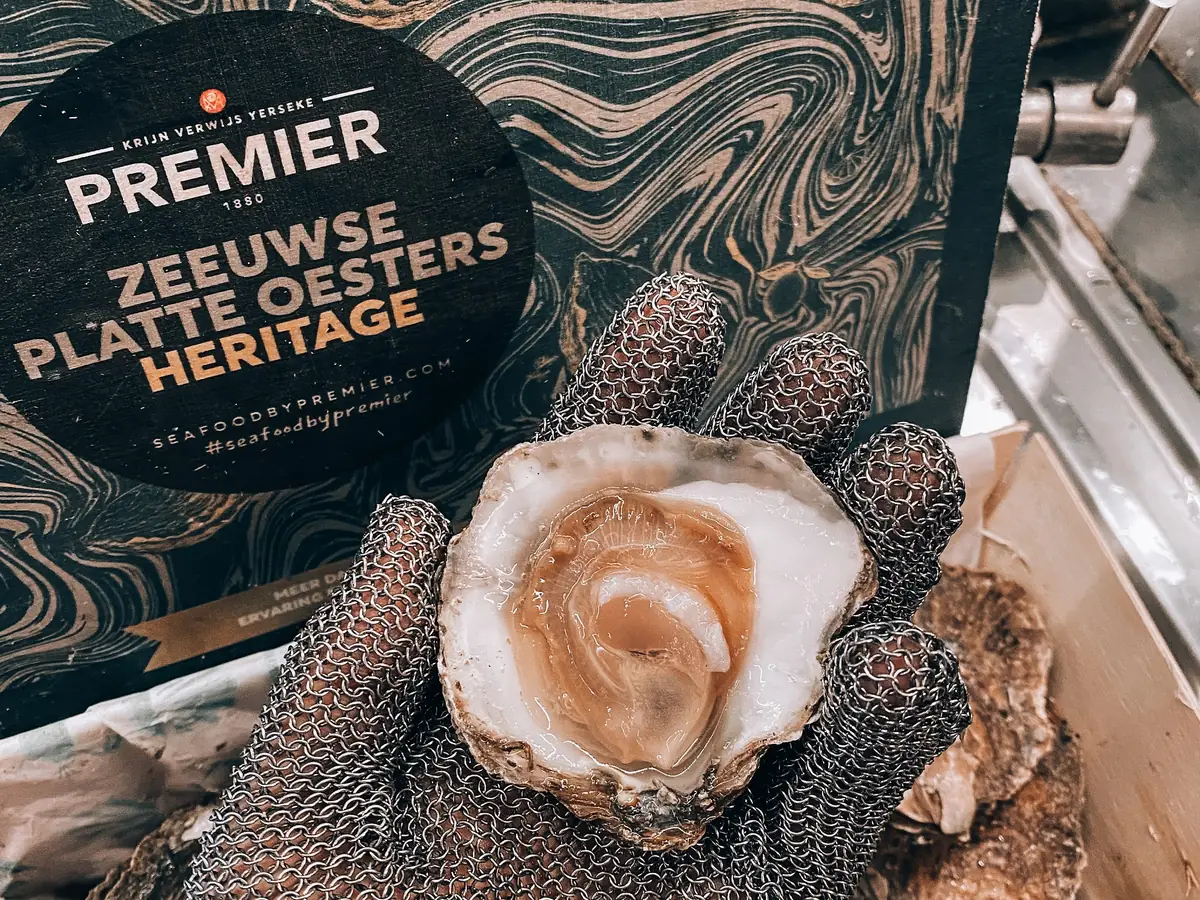
This is the European flat oyster, Ostrea edulis — a different species from every other oyster on this list, and the oyster Europe ate for centuries before the Pacific cupped oyster arrived. Round, smooth, heavy in the hand.
Heritage is the right name for it. Pieter Verwijs began farming flat oysters in 1880, and this oyster is grown on plots that have been in the Verwijs family for 140 years. It is a purely Zeeland product.
It is also a survivor. The severe frost of 1963 and the oyster disease outbreak of the 1980s all but wiped out the Zeeland flat oyster, and that collapse is precisely why the cupped oyster took over Dutch waters. The population is thriving again now, but the flat oyster grows slowly and reproduces slowly, so it stays genuinely scarce and genuinely seasonal — broadly September to March.
That slow growth is the flavour. Years of filtering cold, salty Zeeland water, taken up deeply rather than quickly.
On the palate
Rich and full rather than delicate, with a long saline, almost metallic minerality that flat-oyster drinkers chase and no cupped oyster imitates. Best eaten naked.
Spéciale de Claire
Huîtres Lambert
Marennes-Oléron, France
Huîtres Lambert was founded in 1974 by Roland Lambert and is now in its third generation — his son Philippe has run it since 1993, with grandchildren Mathieu and Sarah joining in 2006 and 2011. The farm works 10 hectares of sea parcs in Marennes-Oléron and another 10 at Paimpol in Brittany, producing around 400 tonnes a year.
What sets the house apart is what it owns on land: 50 hectares of claires. These are converted salt marshes — shallow, clay-bottomed, intensely mineral, fed by the nutrients that grow the oyster's food.
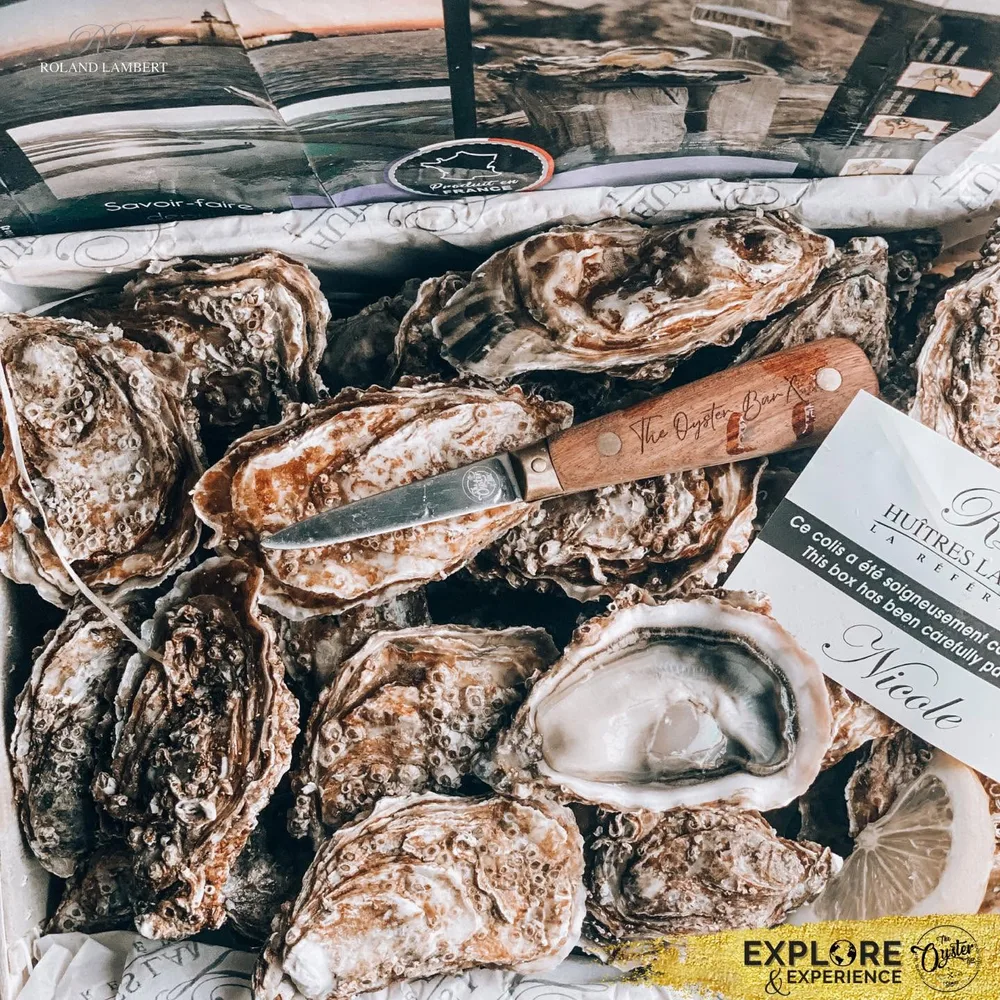
A Spéciale de Claire is not simply a bigger Fine. The oyster is selected before refining for its regular shape, its roundness and its thickness — the deeper cup is what announces the greater volume of flesh. It then refines in the claires for a minimum of 28 days at no more than 3 kg per square metre. The refining also strengthens the shell, which is why a claire-refined oyster holds better than the same oyster grown only in open sea. Under IGP rules it is sold from September to May.
On the palate
Firm and round in the mouth, with the salinity dissolving into a sweetness that dominates the finish.
L'Émeraude
Huîtres Lambert
Marennes-Oléron, France
L'Émeraude is Lambert's own creation, the house's small jewel, and the clearest demonstration of what their claires can do.
Selection comes first and it is strict: only oysters already fleshy and regular in shape are pulled off the sea parcs. Those then go into the claires for a minimum of 40 days — longer than the Spéciale de Claire — because for this oyster the refining is not a finishing touch, it is the entire product.
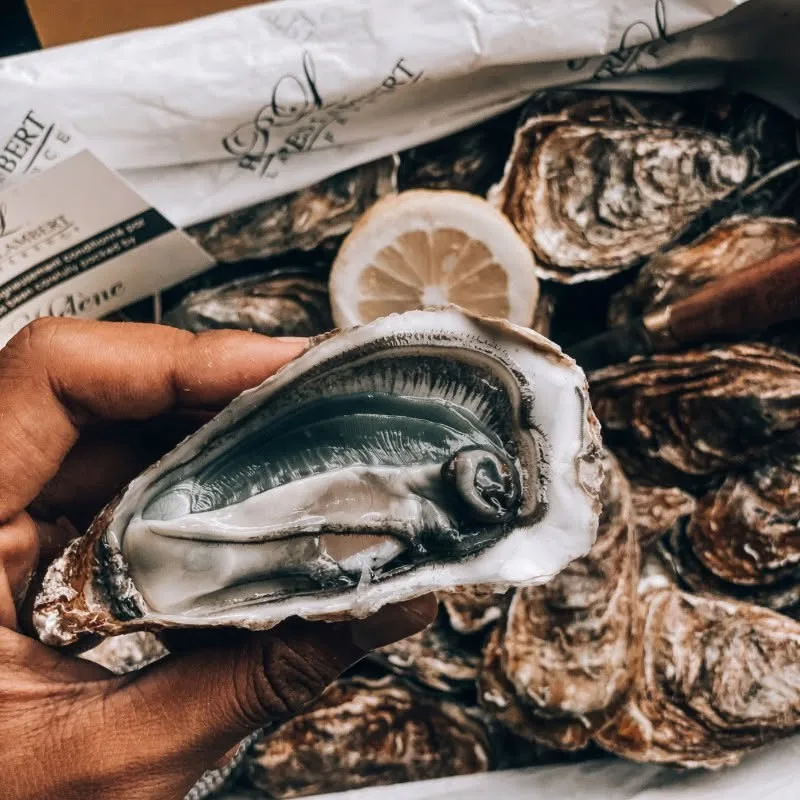
The green comes from the claire itself. Lambert name the cause: the navicule bleue, a microscopic alga that develops in these basins and, on contact with the oyster's flesh, turns it that colour. It cannot be ordered up on demand — the greening is unpredictable, and mostly happens between September and April. That is why owning 50 hectares of claires matters: more basins, more chances of the colour and the taste. The oyster is strictly seasonal, October to May.
On the palate
White, savoury flesh behind gills of emerald green — Lambert call that colour irrefutable proof of a special oyster long refined in claire and handled with real care.
Ostra Regal
La Famille Boutrais
Born in France, grown in Ireland
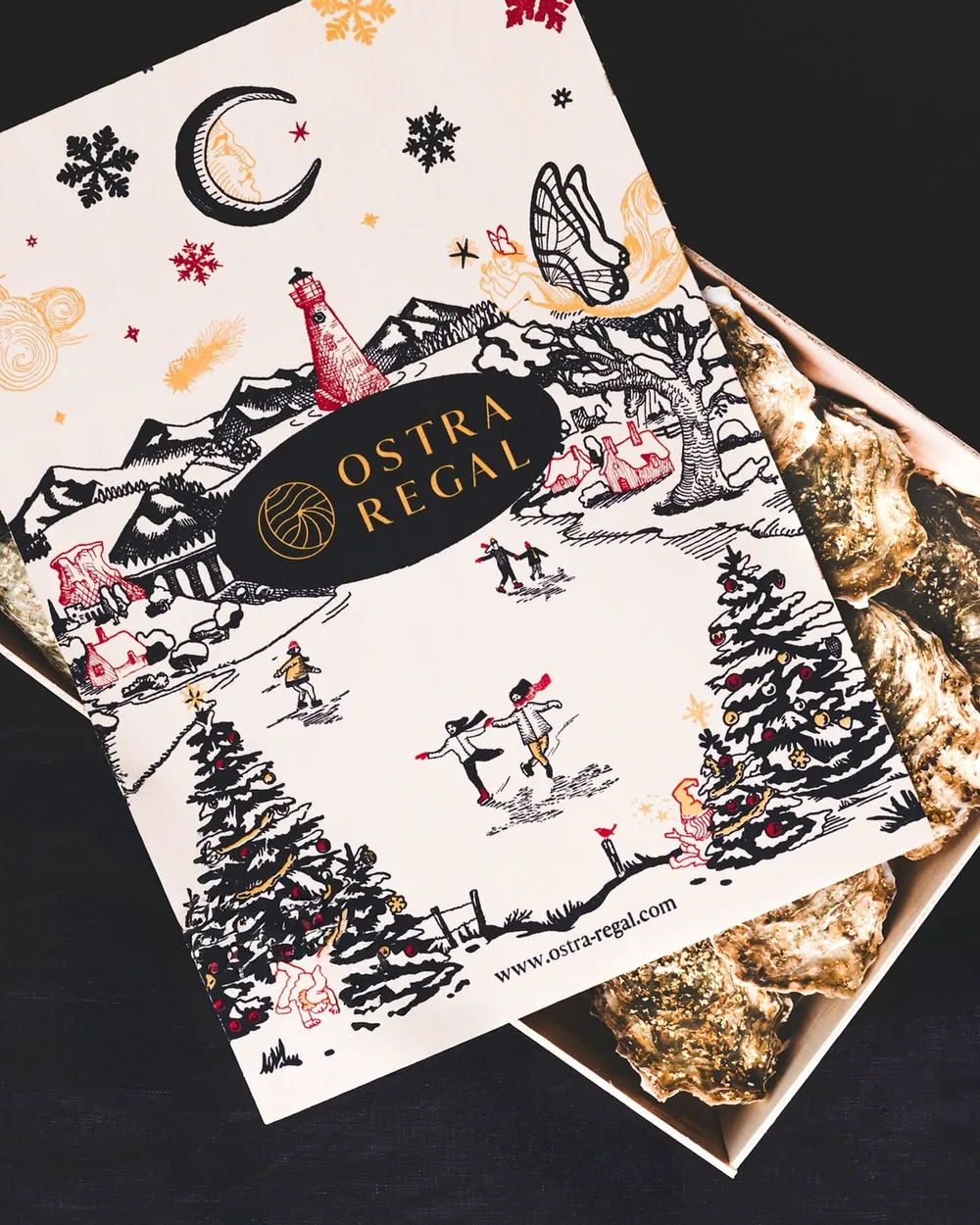
Ostra Regal is produced by one family and no one else: the Boutrais, Breton oyster farmers working both Breton and Irish grounds, with Pascal Boutrais as the founder of the brand.
The oyster is born in France and grows up in Ireland. French spat spends a year on the Clew Bay parks until it reaches three or four centimetres, and is then sorted — counter-intuitively. They keep the roundest, which the trade calls boudeuses, and the very smallest, the queues de lot, because both are slow growers that put their energy into fattening rather than into building shell.
The selected oysters then spend two and a half years in the conche de Bannow, in southeast Ireland. A conche is a near-enclosed natural bay — this one a bird sanctuary of more than 10,000 hectares, with a single mouth about a hundred metres wide as its only link to the sea. Despite that size it empties and refills completely on every tide, so the water is always renewing. The family describe it as a giant natural claire.
Inside it, the numbers are extreme: two oysters per square metre, and each oyster handled more than sixty times to hold back shell growth and push the energy into flesh. The result carries up to 18 per cent of the shell in meat, which is what the house means by super spéciale.
On the palate
A pearly shell opening onto meaty flesh — immaculate white muscle against the dark edges of the mantle. Crunchy, sweet-salty, and lifted by a light hazelnut note at the finish. The sweetness is earned: across those years in the conche the oyster feeds on a wide variety of plankton, and that is where the sugar comes from.
La Zélandaise
Premier — Krijn Verwijs Yerseke
Oosterschelde, Zeeland, Netherlands
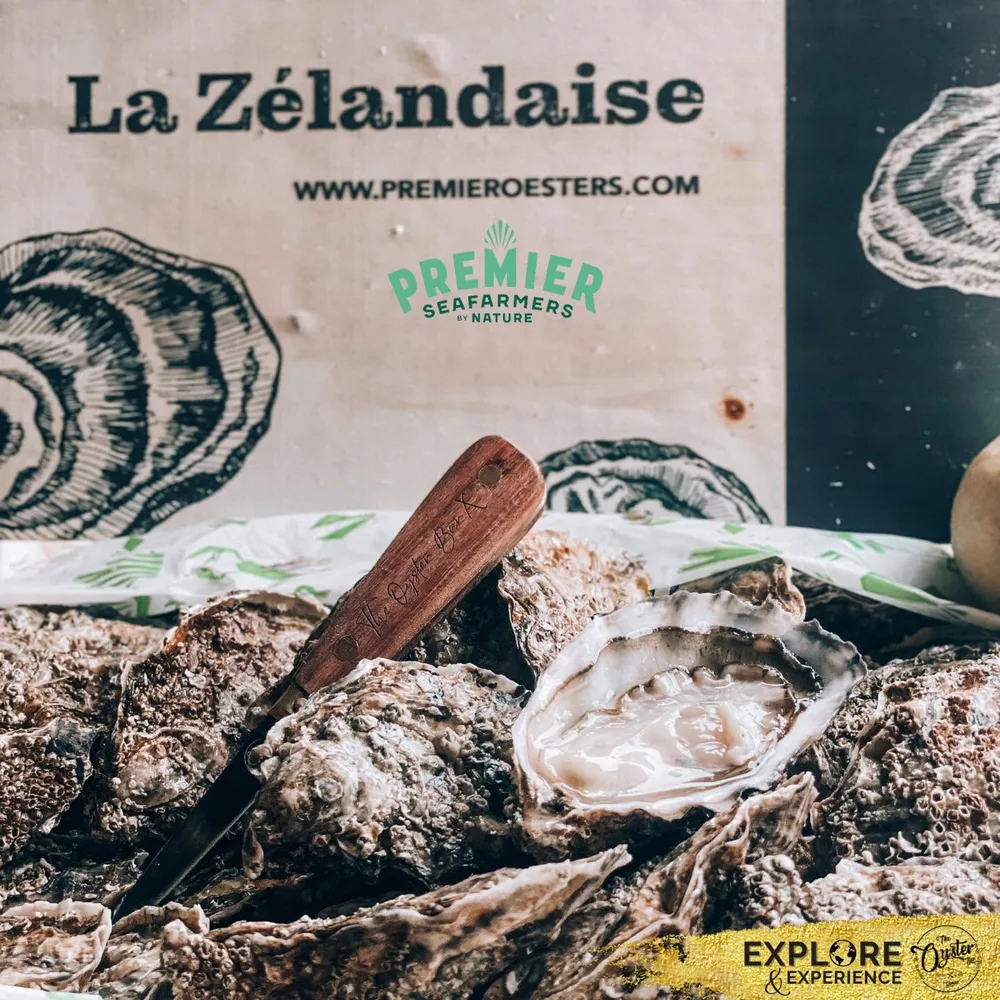
Pieter Verwijs started farming oysters at Yerseke in 1880. Yerseke had become the shellfish hub of Europe around 1870, when the invention of the oyster pit let farmers and traders hold harvested oysters onshore for far longer than before — a change that reshaped the whole trade. The family business trades as Premier today, and La Zélandaise is its flagship.
It is a Zeeland oyster grown the French way. Their farmer Hans Nelis raises it in bags on tables in the Oosterschelde rather than on the seabed, and the bags are turned, shaken and moved on a schedule so each oyster keeps a good shape and sits square in the current. You get the form of a French or Irish oyster with the salinity of Dutch water.
Gault&Millau named it their Oyster of the Year. Their reasoning, in short: it is a cupped oyster on paper, but the creaminess and the restraint of the salt give it the kind of finesse people normally associate with a Zeeland flat oyster, and it signs off on a nutty note. Every Premier oyster also spends at least 24 hours in indoor pits of purified Oosterschelde water before it leaves.
On the palate
Creamy and round, with salt that is present rather than assertive, finishing nutty. A good oyster to put in front of someone who thinks they don't like oysters.
Tia Maraa
Maison Gillardeau
Ireland
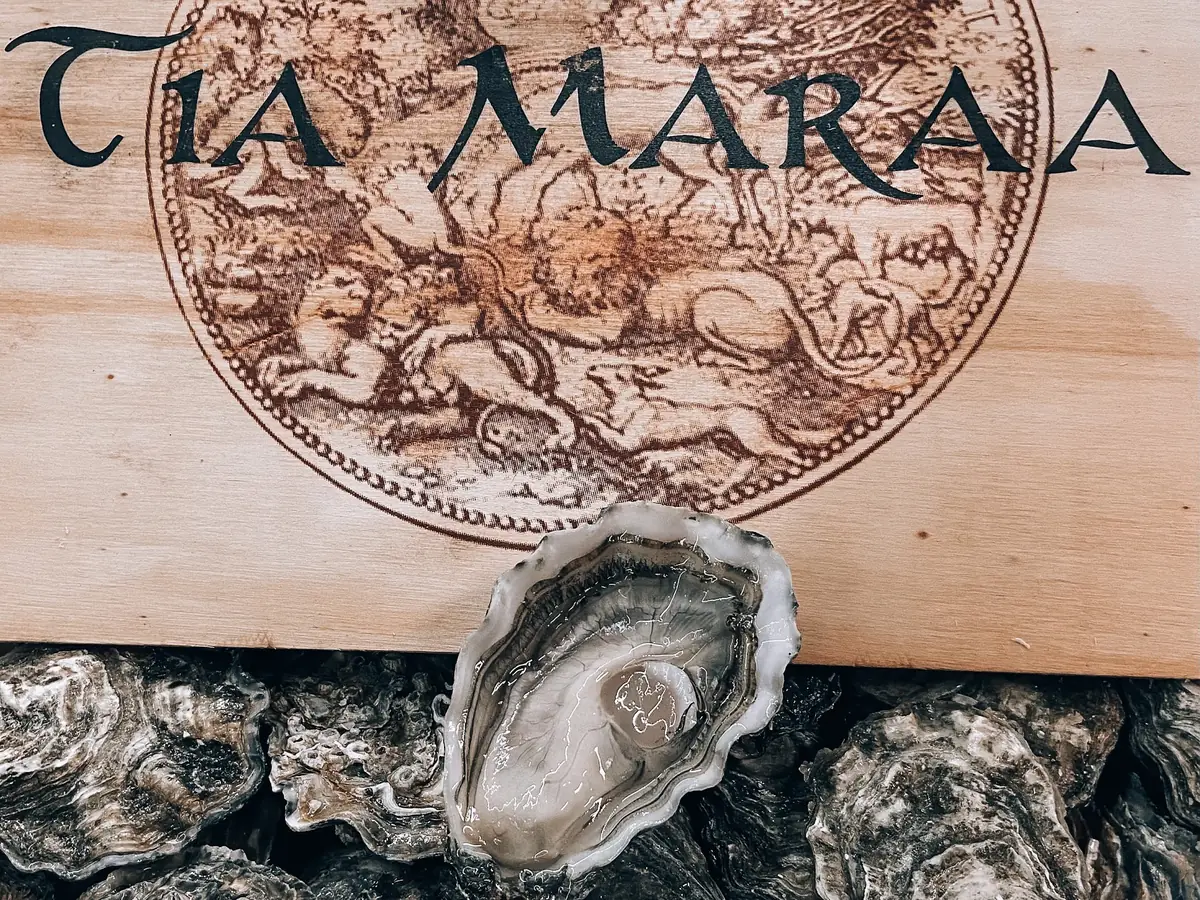
Tia Maraa is the all-Irish version of the Gillardeau house — the most recognised name in French oysters applying its own standards to a different sea. This one is farmed by choice in Irish waters from birth right through to maturity.
The choice of water is deliberate. The Atlantic here is nutrient-rich and, crucially, neither particularly warm nor particularly cold — conditions that suit an oyster's growth better than a sea with extremes. The result is high fleshiness for the size of the shell.
The tides do the rest. Because the oyster has to hold itself together against a consistent ocean swell, it builds a notably strong callus: a hard, thick shell that takes real effort to open and protects dense flesh inside.
On the palate
Predominantly sweet — that is the signature, not the salt — with light iodine notes sitting behind the sweetness, and the crunch you would expect from a shell built against the tide.
Joséphine
Maison Gillardeau
La distinguée · a land of sand and water, at the edge of the Atlantic
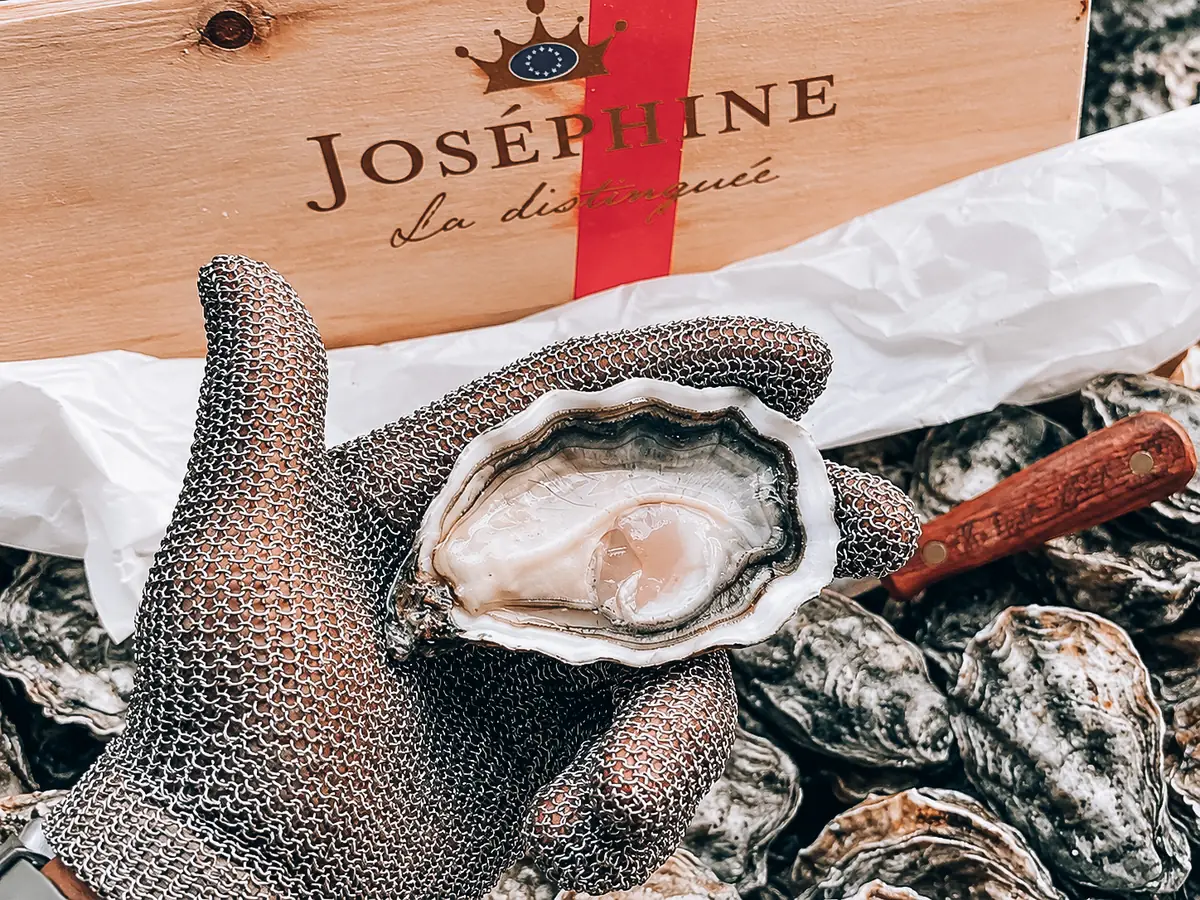
Gillardeau call this one la distinguée, and it is one of the more recent things they sell — the house's own brochure still describes it as being at the beginning of its marketing, with gourmets already won over by its particular taste and the curves of its shape.
The Joséphine owes everything to an unusual production method. The house lists its secret plainly: self-turning bags, patience, tenacity, a great deal of optimism, and above all an exceptional terroir — a land of sand and water at the edge of the Atlantic.
The method is simple and respectful of the rhythms the ocean imposes. Like rows of vines at the water's edge, oyster bags fitted with floats swing with the tides. Nature performs the essential gesture of oyster farming, le virage — the turning. Without that work, shell growth, la pousse, develops at the expense of taste quality, and seaweed clogs the mesh and cuts the oyster off from its daily feed.
A few weeks old, the oyster goes into a bag positioned on a trestle, and the bags are turned regularly while the growth is followed. At eighteen months it reaches roughly 50 to 70 grams. From there it keeps developing inside a self-turning bag attached to the line-ups, the shells rolling according to the pace and the intensity of the elements. Excellence takes time to obtain, as the house puts it.
On the palate
Generous, curved shapes and a hardened shell, windswept by the movement of the ocean. Open it and the purity and whiteness of the mother-of-pearl is the surprise; firm white flesh fills the curves of the shell. The continual whirlpools it had to hang on against show up as a very characteristic over-developed muscle. On the palate: firm and round, a harmonious salinity, sweetness, and an incredible crunch from that muscle.